Due to the fast-paced world we live in today, convenience often takes precedence over well-being. Several modifications to one’s lifestyle that include working overtime, a sedentary lifestyle, consumption of unhealthy food choices, and skipping meals have proven to increase efficiency but are not conducive to good health and cause considerable nutrient deficiencies.

Typically, individuals think that eating their food is all they need to do to be nutritionally sound. Nevertheless, even people who eat enough will lack certain important nutrients, vitamins, minerals, fiber, and probiotics required for the proper functioning of the body.


Impact of Lifestyle on Nutrition

The modern lifestyle affects the amount and nature of nutrients that we take. Issues like unhealthy eating habits, longer screen time, stress, insomnia, and lack of exercise all pose threats to our ability to properly absorb and utilize these nutrients.

Deficiencies in iron, zinc, magnesium, vitamin D, vitamin B12, and fiber are becoming widespread nowadays. This is because the modern lifestyle adversely affects their absorption into the body.


Common Lifestyle Factors Leading to Nutritional Deficiencies


Below are some factors that show the impact of lifestyle on nutrition:

  1. Fast and Processed Foods Consumption

The consumption of fast foods rather than a proper, healthy diet results in a deficiency of vital nutrients such as vitamins, minerals, proteins, fiber, and gut-related foods, resulting in poor health.

  1. Less Physical Activity and No Sunlight

The lack of sunlight leads to a deficiency of vitamin D, which is required for bones, immunity, muscle strength, and overall well-being. Inactivity may affect the rate of metabolism.


  1. Stress and Lack of Sleep

Stress creates an increased demand for nutrients such as magnesium, vitamin B, and zinc. Inadequate sleep affects hormones and metabolism, as well as appetite.


Signs You May Have a Nutritional Deficiency

Symptoms can include:

  • Fatigue
  • Sickness
  • Digestive disorders
  • Weakness in hair
  • Inability to concentrate
  • Lack of muscle strength
  • Slower healing from sickness
  • Brittle nails and dry skin

These symptoms indicate that a person may need to consult a nutritional expert.


Why Early Nutritional Support Is Important

Taking care of nutrition issues early will help to avoid any further health complications that come from poor nutrition. Good nutrition involves having a well-balanced diet, but it may be complemented by supplements.

Health professionals advise on various supplements, such as probiotics and fiber products, among others, to help ensure proper digestion and absorption of nutrients.


Opt For Hinucon Products for Nutritional Support

At Hinucon, there is a variety of nutritional products that are intended to enable the body to stay in good condition by enhancing digestive processes. They include:

Fibo Syrup: It contains soluble fiber that facilitates good digestion.

Pro-Z Sachets: This product contains probiotics and zinc, which are key elements in maintaining a good digestive process and increased immunity.

Using well-formulated nutritional products combined with a healthy lifestyle will help you to solve all nutrition-related problems.


FAQs

  1. What are the most common nutritional deficiencies?

The most common deficiencies include vitamin D, iron, zinc, magnesium, vitamin B12, and dietary fiber.

  1. Can stress cause nutritional deficiencies?

Yes, stress can play a major role in nutritional deficiency. It can increase the requirement for nutrients like zinc and B vitamins.

  1. How can I improve my nutritional status?

By consuming a balanced, healthy diet and lifestyle, and considering nutritional support you can check nutritional supplements by Hinucon.


Conclusion

There is a significant impact of lifestyle on nutrition regarding how we eat, work, and live in general. Unfortunately, along with the changes in our lifestyles, there has been an increase in cases where people develop nutritional deficiencies. Factors such as improper dieting, stress, no exercise, and poor digestion, amongst others, can lead to a situation where individuals do not consume enough nutrients.

However, nutritional deficiency can easily be prevented and controlled through proper decision-making and good nutrition. Emphasizing digestive health and consumption of nutrient-rich foods, together with reputable brands such as Hinucon, can help deal with nutritional deficiency successfully.

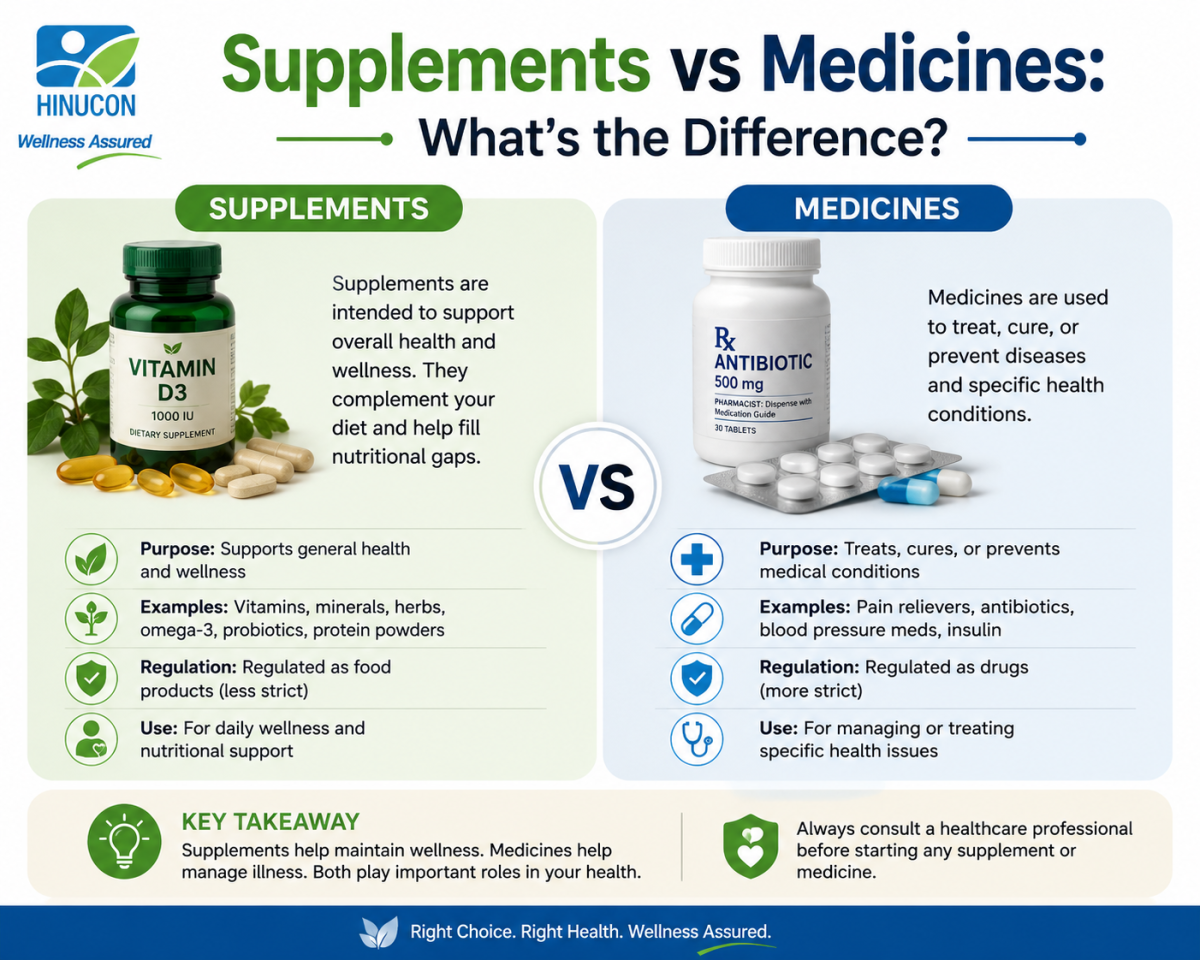
A lot of people use the words “supplements” and “medicines” as if they mean the same thing.

But there is a huge difference between them. Confusing the two can create unrealistic expectations about what each one is actually supposed to do.

Some people take supplements expecting immediate treatment, while others avoid medicines, thinking supplements can fully replace them. That’s usually where the misunderstanding begins.

Because while both are connected to health, they serve very different purposes. At Hinucon, this is something that often needs proper explanation, especially as more people become conscious about wellness and daily nutrition.


Medicines Are Designed to Treat Specific Conditions

Medicines exist for a direct medical purpose.

They are used to:

  • Treat illnesses
  • Control symptoms
  • Manage diagnosed conditions

For example:

  1. Painkillers reduce pain
  2. Antibiotics fight bacterial infections
  3. Blood pressure medicines help regulate hypertension

In simple words, the role of every medicine is targeted and medically specific.


Supplements Support the Body Differently

Supplements work in a different way. They are generally meant to support nutrition and overall wellness rather than directly treat diseases.

This can include:

  • Vitamins
  • Minerals
  • Protein supplements
  • Omega-3
  • Nutritional support products

The goal is usually to help the body maintain proper nutritional balance. 

At Hinucon, we believe in educating our customers so that they choose what’s best for them and their body, not for the trend.


The Biggest Difference Is the Purpose

This is the simplest way to understand how supplements differ from medicines.

Medicines are primarily used to treat or manage medical conditions, while supplements are primarily used to support health and nutrition.

That difference changes everything about how they are used and perceived.


Supplements Are Not “Instant Fixes”

Supplements usually work gradually. They support the body over time rather than force immediate symptom relief.

For example:
A vitamin deficiency may improve slowly through consistent supplementation.


Medicines Usually Require More Strict Regulation

Medicines typically go through extensive clinical testing before approval because they directly affect treatment outcomes. Supplements are also regulated, but their role is different since they are focused more on nutritional support.

That’s why proper understanding matters before using either one incorrectly.


Why People Sometimes Need Both

The topic  is not always “supplements vs medicines.”

Sometimes, both play different roles together.

For example:
A person may take prescribed medicine for treatment while also using supplements to support nutritional health during recovery.

At Hinucon, this balanced understanding is important because wellness often involves multiple layers of support.


Why Hinucon Focuses on Better Health Awareness

At Hinucon, the focus is not just on products, it’s also on helping people understand what they are using and why. Informed health decisions are always better than blindly following trends or assumptions. That’s why conversations around the difference between supplements and medicines matter more today than ever before.


The Goal Is Understanding, Not Confusion

Supplements are not fake medicines. 

Medicines are not “strong supplements.”

They simply serve different purposes, and once people understand that clearly, they make healthier and more realistic choices about their well-being.


Conclusion

Health products should not be chosen based on trends alone. They should be understood properly first.

Because supplements support the body differently. Medicines treat the body differently.

And knowing that difference is what helps people use both more responsibly.


FAQs

  1. What is the difference between supplements and medicines?
    Medicines treat medical conditions, while supplements support nutrition and wellness.


  1. How do supplements differ from medicines?
    Supplements focus on nutritional support, whereas medicines are designed for treatment and symptom management.


  1. Can supplements replace medicines?
    Not usually. Medicines and supplements serve different purposes.


  1. Are supplements safe for daily use?
    Many are, but usage should still be guided properly depending on individual needs.


  1. What does Hinucon focus on?
    Hinucon focuses on health awareness and wellness-related support solutions.